Read the tire.
Fix the cause.
Every casing, repair and wear condition, illustrated and coded for VMRS. Each one tells you what you'll see, why it happened, and what to do about the tire, the vehicle and the operation.
Start where the damage is
What happens to the tire
Tap a disposition to filterSafety-critical conditions
Act immediatelyInspecting and grading a tire
Grade every tire after demounting and before it goes to the scrap pile. A casing waiting outside can rust past saving, so decide its future the same day and store usable casings dry and covered.
The five grading questions
Seven inspection zones
| 1 | Tread / crown |
| 2–3 | Upper sidewall and shoulder, each side |
| 4–5 | Lower sidewall and bead, each side |
| 6–7 | Interior, both halves |
Inspection procedure
Radial tire construction
Knowing which layer failed narrows the cause. Separations between the tread and belts point to adhesion or air migration; breaks in the radial ply point to impact or fatigue; liner damage points to running low or a poor repair.
Reading a VMRS condition code
Each condition carries a two-letter alpha code and a four-digit numeric code from TMC's Vehicle Maintenance Reporting Standards (tire system code 017). Record one of them on every scrap or warranty tire so the data can be sorted later.
| 2nd digit | Area |
|---|---|
| 1 | Bead area |
| 2 | Sidewall |
| 3 | Crown |
| 4 | Interior |
| 5 | Improper / failed repairs |
| 6 | Found in more than one area |
| 7 | Irregular wear |
Condition library
Filter by where the damage is, what happens to the tire, or the root cause. Open any card for the full analysis.
Wear analyzer
Diagnose irregular wear with the tire still on the vehicle. Inflation and alignment cause most of it. Before pulling a tire, mark its position, direction of rotation and unit number on it.
1 · Measure across the tread
Enter depths in 32nds of an inch at the same spot on the tire, outer shoulder to inner shoulder.
2 · What do you see around the tire?
Likely patterns
Steer axle patterns
Root-cause analysis
The same few causes sit behind most conditions. Fix them at the fleet level and many failures stop together. Click any cause to see every condition it drives.
Conditions linked to each cause
Where fleets get the biggest return
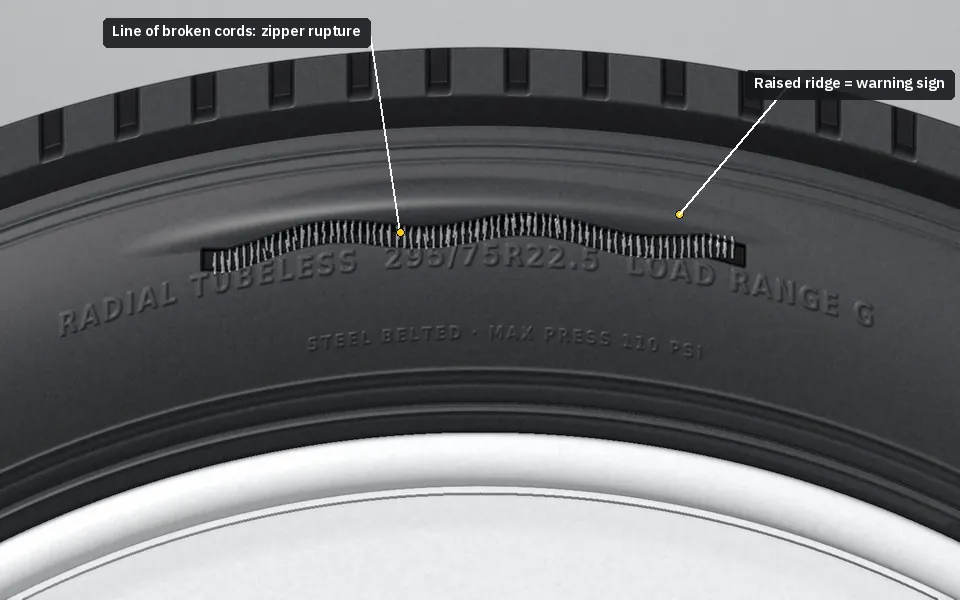
The most constant cause of irregular wear and the one most often overlooked. Running at 80% or less of target pressure also puts the casing at risk of zipper rupture.
Steer, drive, trailer and dolly axles. The least understood cause and usually the last one corrected. See TMC RP 642.
Bead lubrication, concentric seating, balance and runout of the tire, wheel, drum and hub.
Match diameters and pressures within a dual set to stop heel/toe, alternate-lug and flat-spot wear.
Demount and inspect every injury, and use a radial repair unit sized and aligned for the injury. Plugs alone are not a repair.
Wear pattern × cause matrix
Use this on the shop floor. Find the pattern, then read across to see which systems to check first.
Inspection log
Record each tire you grade. The log flags low tread, pressure loss, and depth differences across the tread that point to irregular wear. Entries stay in this browser on this device. Copy them out as CSV for your records system.
Photo check & warranty claim
Upload photos of a damaged tire. Claude compares them against every condition in this guide, suggests the most likely match and next steps, and tells you whether it looks like a warranty claim. Then build the claim summary to take to the dealer.
1 · Add photos
2 · Build a warranty claim
Manufacturer warranties cover defects in workmanship and materials, and they're filed through an authorized dealer with the tire present for inspection. This builder checks the basics against each maker's published terms and assembles a claim summary to hand over.
Claim summary
Glossary
Terms used throughout this guide.